Sunday, March 30th 2025
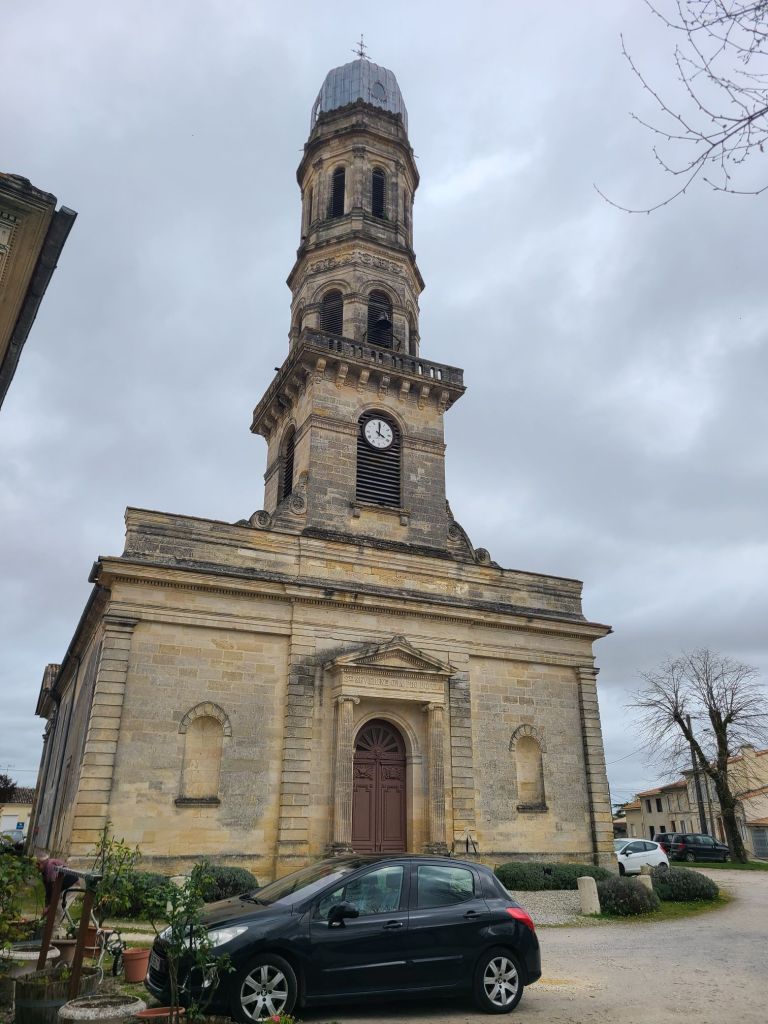
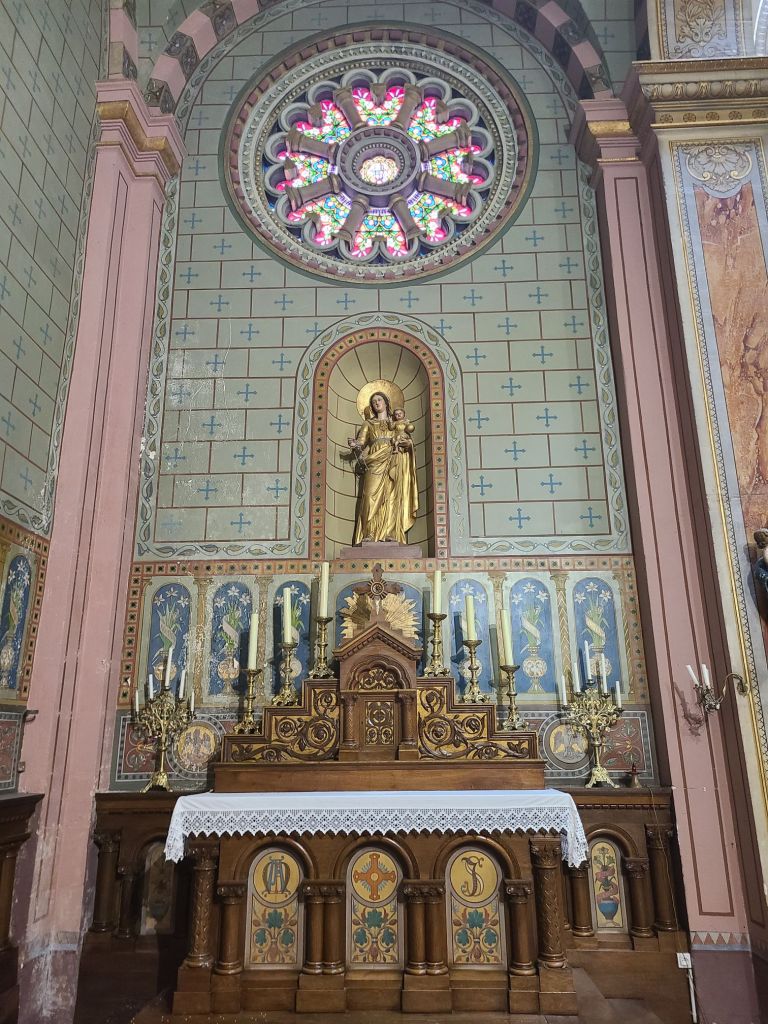
Last night, a member of the guild welcomed me and offered a tour of Saint-Romain Church.
I learned that the name Cartelègue comes from the Latin quarta leuga, meaning « fourth league »—referring to its location four leagues from Blaye to Saintes along the old Roman road.
In May 1242, King Henry III of England arrived in Royan, supported by local lords. In response, King Louis IX (Saint Louis) of France assembled an army of 25,000 men to drive him out. The Battle of Taillebourg became famous for the French victory, forcing Henry III to retreat to Blaye. As he withdrew, he poisoned the wells, which halted the French army near Cartelègue, where King Louis IX spent some time. Eventually, Henry III fled France via Bordeaux.
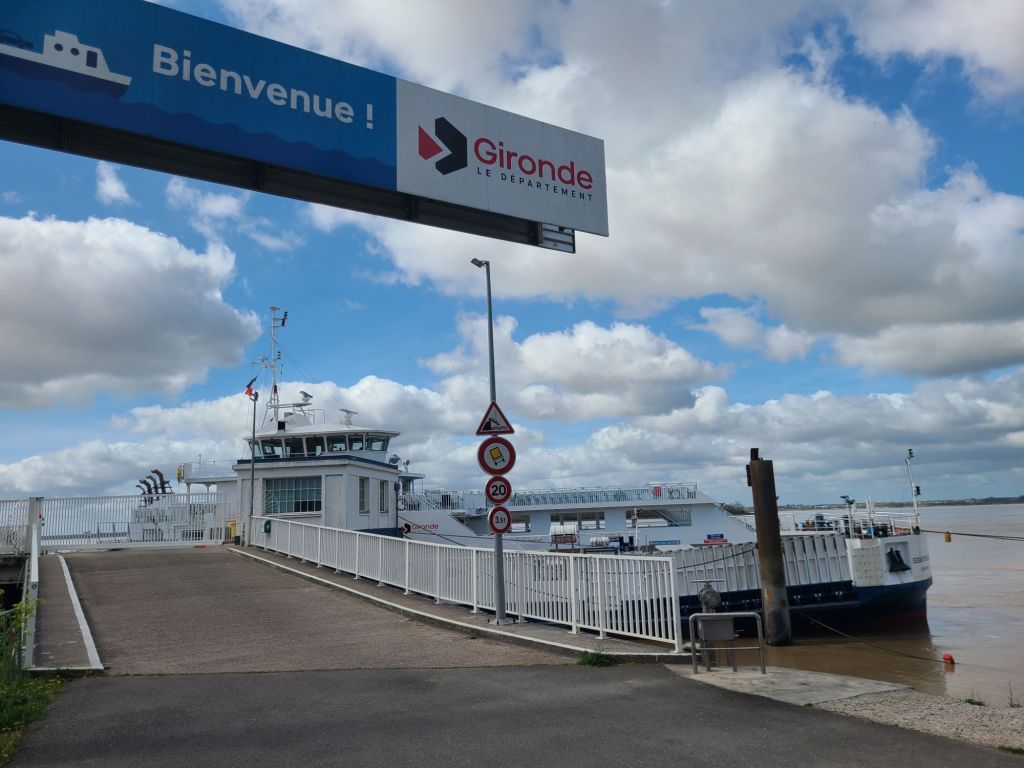
I left Cartelègue a little late, aiming to catch the 11 AM ferry from Blaye to Lamarque. This gave me extra time to explore Blaye before the next departure at 3 PM.
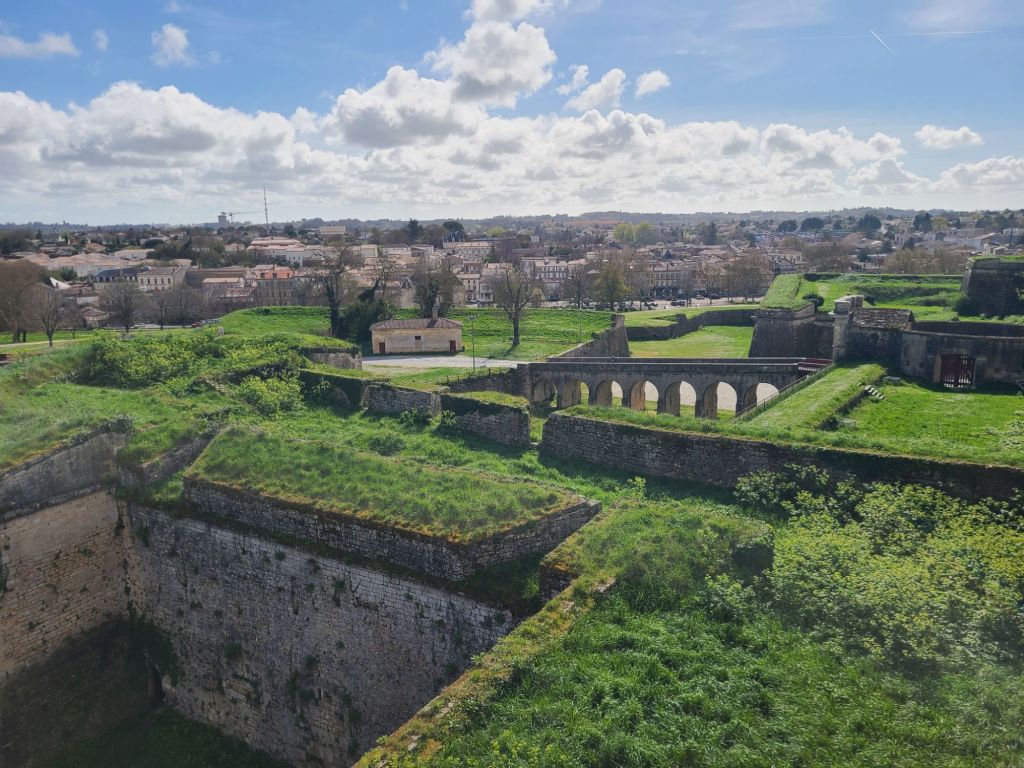
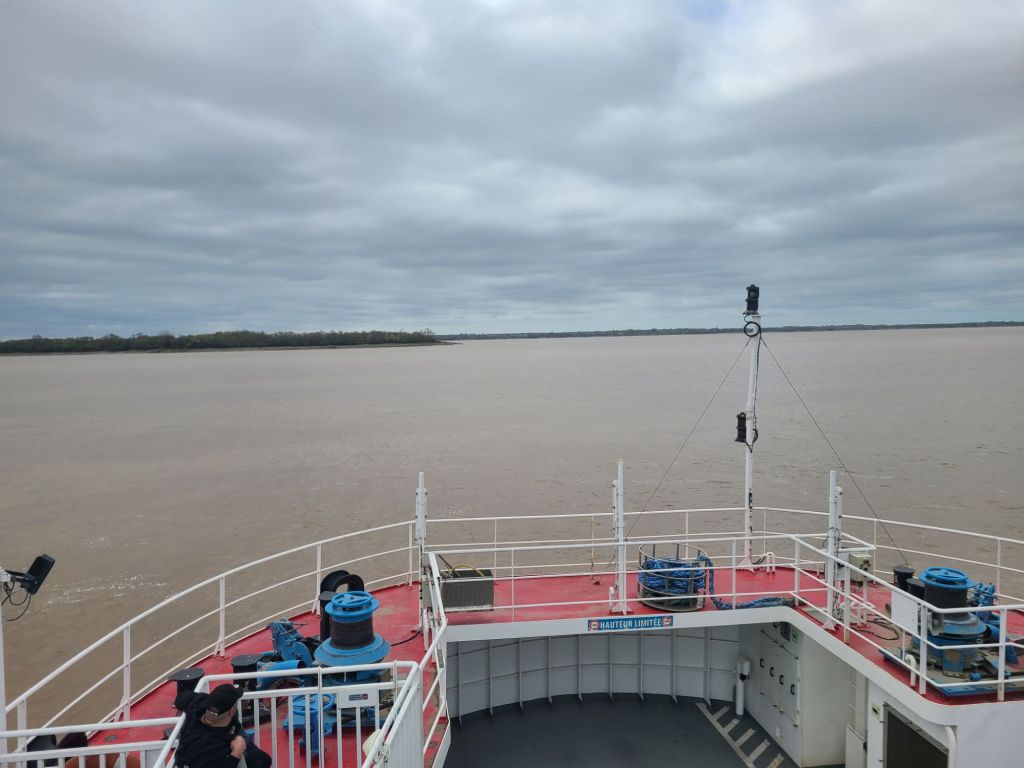
Blaye still holds the remnants of a once-massive fortress. Its citadel stands on the edge of the Gironde Estuary—the largest estuary in Western Europe.
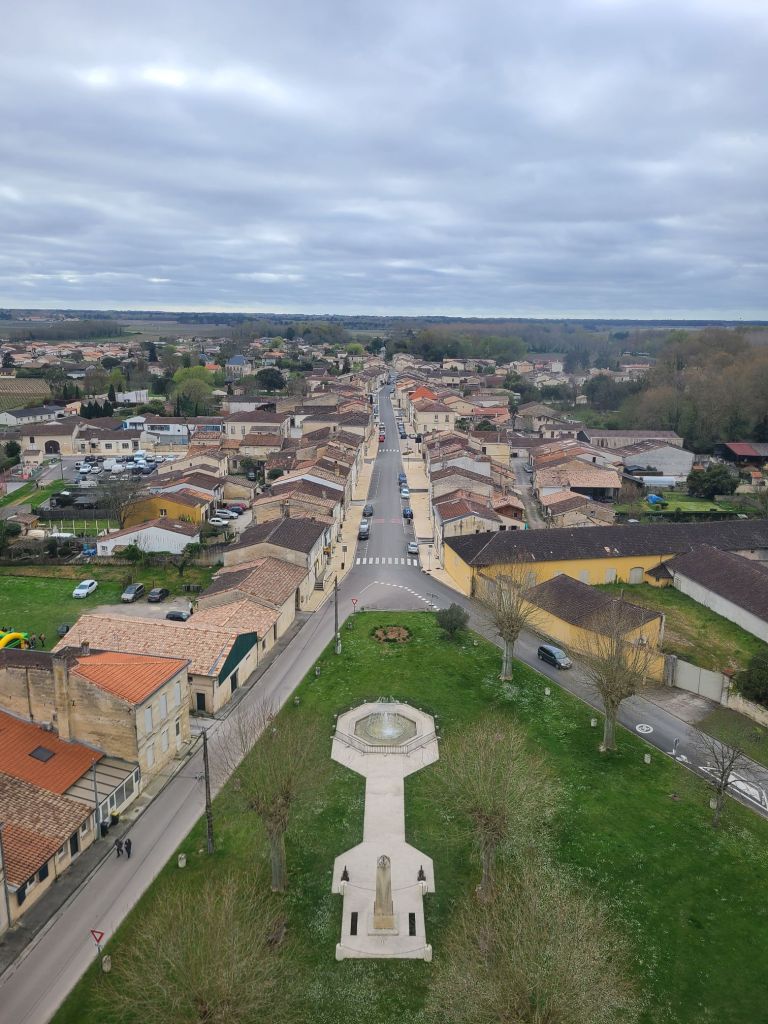
Later, with my host for the night, I visited the church in Lamarque and even had the chance to climb into the dome.
Hier soir, un membre des associations Jacquaire est venu m’accueillir et m’a proposé une visite de l’église Saint-Romain.
J’ai appris que le nom Cartelègue vient du latin quarta leuga, qui signifie « quatrième lieue »—une référence à sa position à quatre lieues de Blaye à Saintes, sur l’ancienne route romaine.
En mai 1242, le roi Henri III d’Angleterre est arrivé à Royan, soutenu par des seigneurs locaux. En réponse, le roi Louis IX (Saint Louis) de France a rassemblé une armée de 25 000 hommes pour le repousser. La bataille de Taillebourg est devenue célèbre pour la victoire française, forçant Henri III à se replier sur Blaye. Lors de sa retraite, il a empoisonné les puits, ce qui a stoppé l’armée française près de Cartelègue, où le roi Louis IX a passé quelque temps. Finalement, Henri III a fui la France en passant par Bordeaux.
Je suis parti de Cartelègue un peu tard, visant le ferry de 11h entre Blaye et Lamarque. Cela m’a laissé du temps pour visiter Blaye avant le prochain départ à 15h.
Blaye conserve encore les vestiges d’une immense forteresse. Sa citadelle se dresse au bord de l’estuaire de la Gironde, le plus grand estuaire d’Europe de l’Ouest.
Plus tard, avec mon hôte du soir, j’ai visité l’église de Lamarque et j’ai même eu la chance de monter dans le dôme.





 Blog
Blog 
Laisser un commentaire